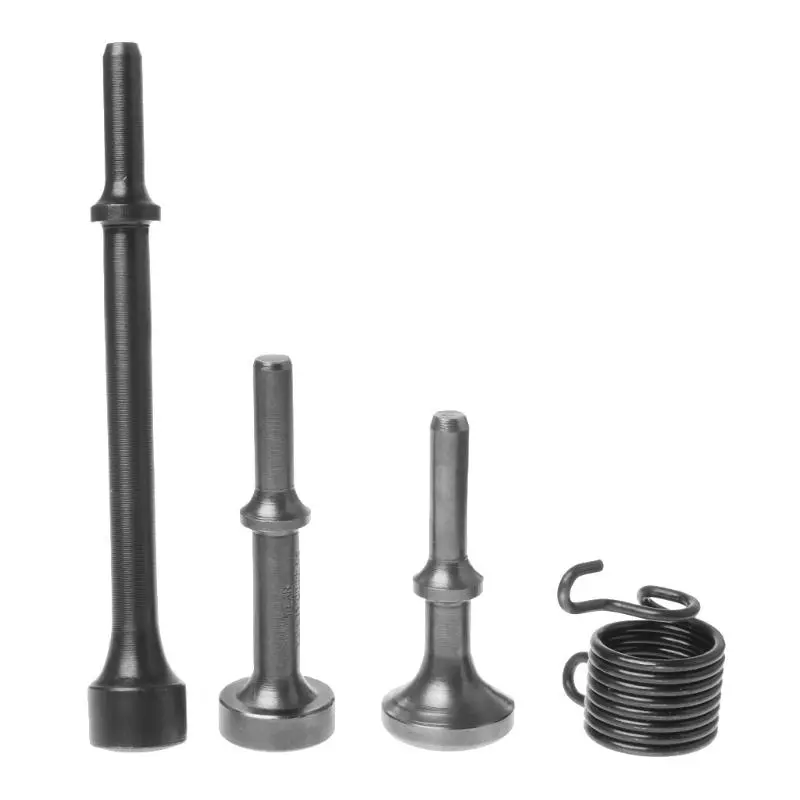
An air hammer, also known as a pneumatic hammer or chipping hammer, is a versatile and powerful tool that transforms compressed air into rapid, forceful blows. Essential for professionals and serious DIYers, it excels in applications where brute force and precision are required. Unlike standard hammers, an air hammer uses a reciprocating piston to drive a variety of interchangeable chisels, cutters, and punches at high speed, making tedious manual tasks efficient and less strenuous.
The core benefit of an air hammer is its ability to tackle demanding jobs with ease. In automotive repair, it's indispensable for separating ball joints, cutting exhaust components, and performing body work like rust removal and panel shaping. In construction and metal fabrication, air hammers are used for demolition, chipping away concrete or mortar, cutting sheet metal, and descaling welds. The key to its versatility lies in the wide array of available bits, allowing one tool to perform cutting, punching, scraping, and riveting.
When evaluating air hammers, consider the blow rate (blows per minute or BPM) and impact energy. A higher BPM is excellent for fast cutting and chipping, while greater impact energy is needed for heavy-duty demolition and driving. The tool's ergonomics, including handle design and vibration dampening, are crucial for user comfort during extended use. Whether you're a mechanic streamlining repairs, a metalworker shaping materials, or a contractor breaking up tough surfaces, a quality air hammer is a powerhouse addition to any workshop, dramatically increasing productivity and capability.
**Choosing the Right Air Hammer: A Quick Guide**
**What size air compressor do I need?** Air hammers require a consistent supply of compressed air. Check the tool's CFM (cubic feet per minute) requirement at a specific PSI. Ensure your compressor can deliver at least that CFM for continuous operation. Most general-purpose air hammers need a 4-6 CFM compressor.
**What are the main types of air hammer bits?** Common bits include chisels (flat, pointed), cutters (for sheet metal), punches, and rivet busters. Investing in a quality bit set matched to your tasks is as important as the tool itself.
**What should I look for in a new air hammer?** Prioritize a comfortable, anti-vibration grip to reduce fatigue. A quick-change chuck allows for fast bit swaps without tools. For automotive work, a compact size is helpful for tight spaces, while demolition may require a larger, more powerful model.
**How do I maintain my air hammer?** Daily maintenance is simple: add a few drops of pneumatic tool oil into the air inlet before use to lubricate internal components. Regularly drain moisture from your air compressor and use an in-line filter to keep the tool clean. Store it in a dry place and keep bits sharp for optimal performance and safety.