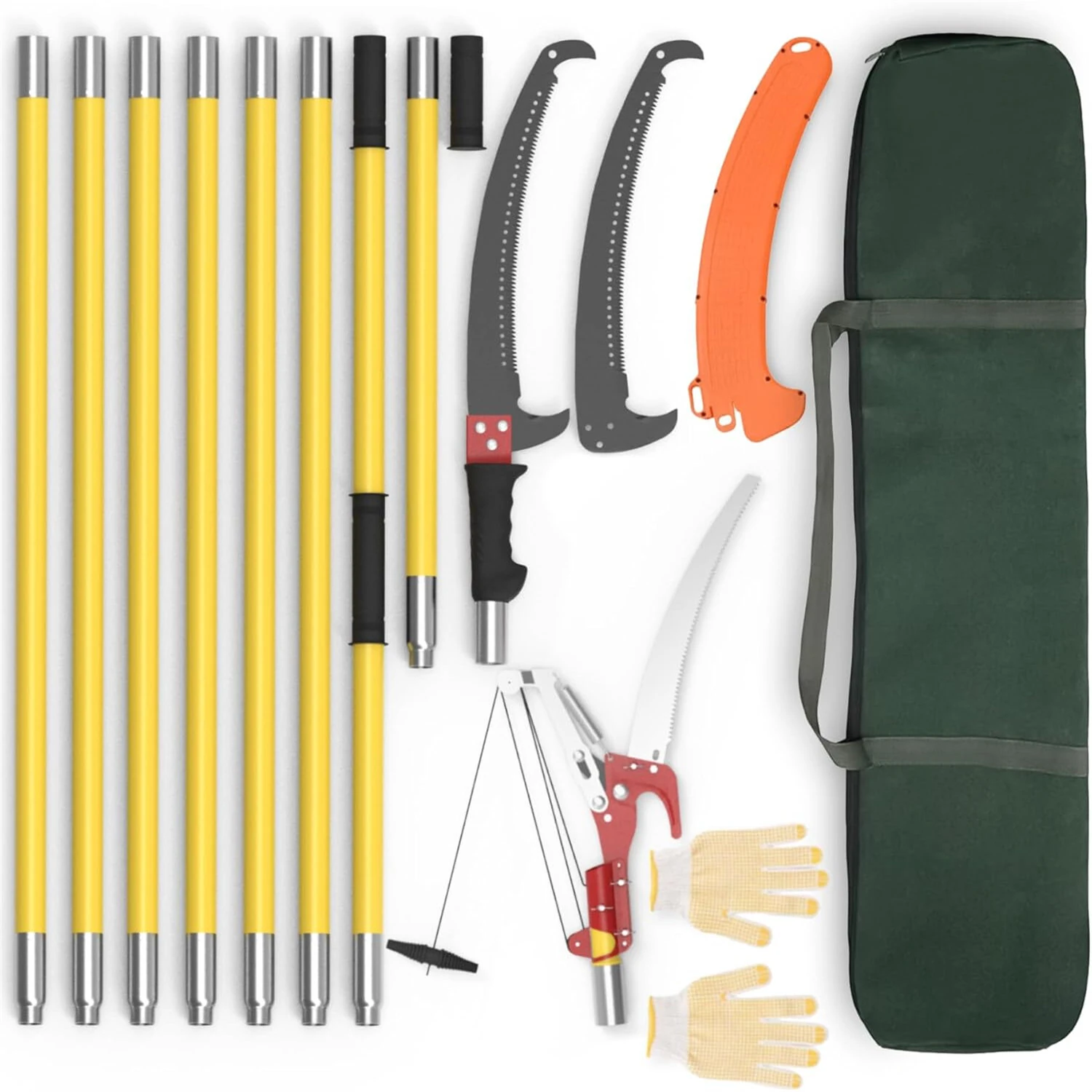
A garden saw is an indispensable tool for any homeowner or gardener looking to maintain healthy trees and shrubs. Unlike chainsaws, garden saws offer precision, control, and quiet operation for tasks like pruning fruit trees, trimming overgrown branches, and clearing storm debris. The right saw transforms arduous yard work into a manageable, even satisfying, part of your garden care routine. Key types include pruning saws, designed for clean cuts on living wood to promote plant health; robust bow saws for tackling thicker, dead branches quickly; compact folding saws for safe storage and portability; and extendable pole saws that allow you to reach high limbs from the ground safely. Modern garden saws feature razor-sharp, impulse-hardened teeth that cut on both the push and pull strokes for faster, less strenuous work. Ergonomic handles reduce fatigue, while specialized tooth patterns—like tri-edge or razor-tooth—are engineered for specific materials, from green wood to dry hardwood. Investing in a quality garden saw means cleaner cuts that heal faster, reducing the risk of disease in your plants. It also means a safer, more efficient tool that lasts for years, making light work of seasonal pruning, landscape projects, and general yard cleanup. Whether you're shaping a hedge, removing a troublesome limb, or harvesting wood for a fire pit, there's a garden saw perfectly suited to the task.
Choosing the right garden saw depends on your specific needs. For general pruning of branches up to 3-4 inches thick, a curved pruning saw is ideal. For thicker limbs or cutting fallen wood, a bow saw with a replaceable blade offers great power. If storage and safety are priorities, a folding saw is a perfect choice. For high branches, a pole saw eliminates the need for a ladder. FAQ: What's the difference between a pruning saw and a bow saw? Pruning saws are for precise, clean cuts on living branches, while bow saws are for faster, rougher cuts on thicker or dead wood. How do I maintain my garden saw? Keep the blade clean and dry. Lightly oil metal parts to prevent rust. Sharpen the teeth periodically with a suitable file for optimal performance. Always use sharp, controlled strokes and let the saw do the work—never force it. For your safety, wear gloves and eye protection, and ensure the branch is securely positioned before you begin cutting.