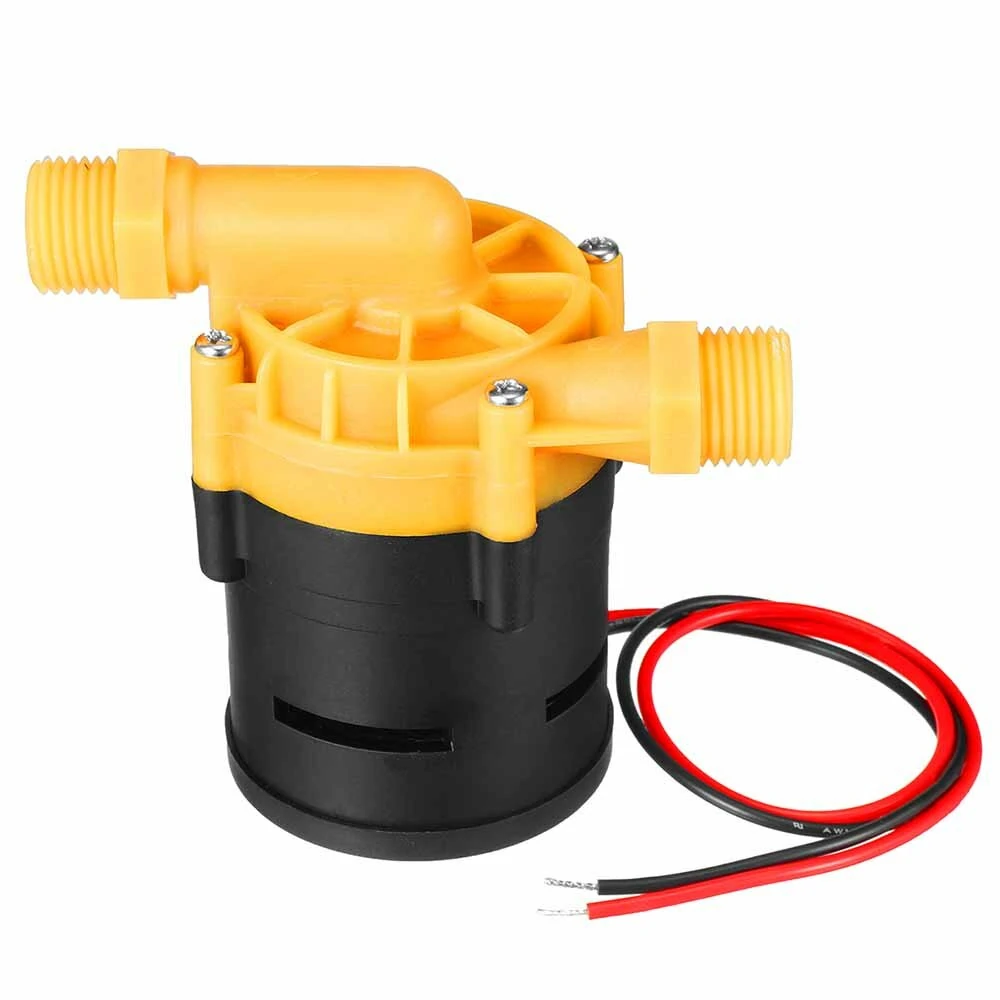
A cooling pump is the beating heart of any liquid cooling system, responsible for circulating coolant to transfer heat away from critical components like your CPU and GPU. In the world of PC building and high-performance computing, an efficient cooling pump is non-negotiable for achieving stable overclocks, maintaining low temperatures, and ensuring system longevity. The primary function of a cooling pump is to maintain a consistent and powerful flow rate, measured in liters per hour (LPH), throughout the entire loop, which includes the water blocks, radiator, reservoir, and tubing.
Two dominant types of pumps lead the market: the D5 and the DDC. D5 pumps are renowned for their exceptional reliability, high flow rates, and remarkably quiet operation, making them a favorite for custom loops where noise is a concern. DDC pumps, on the other hand, are more compact, offering impressive pressure head (the force to push coolant through restrictive components) in a smaller form factor, ideal for tight spaces like Small Form Factor (SFF) builds. Modern cooling pumps often come integrated with PWM (Pulse Width Modulation) control, allowing you to fine-tune pump speed via your motherboard for the perfect balance of cooling performance and acoustics.
When selecting a cooling pump, key considerations include flow rate, pressure head, noise level (measured in dBA), and durability. A robust pump ensures that your coolant moves effectively, preventing hot spots and maximizing the radiator's heat dissipation capacity. Whether you're building a silent workstation, a hardcore gaming rig, or a specialized cooling solution, investing in a high-quality cooling pump is foundational to a successful and efficient liquid cooling setup that protects your valuable hardware.
Choosing the right cooling pump depends on your specific needs. For most standard or large custom loops, a D5 pump offers a perfect blend of power and quiet operation. For compact builds with restrictive components, a high-pressure DDC pump is often the better choice. Always ensure your pump's flow rate and pressure head are adequate for your loop's complexity.
**FAQ: Cooling Pump Buying Guide**
**Q: Is a more expensive pump always better?**
A: Not necessarily. Match the pump's specifications (flow and pressure) to your loop's requirements. An overpowered pump can be unnecessarily loud and costly.
**Q: How important is PWM control?**
A: Highly recommended. PWM allows dynamic speed control, letting the pump run quieter at idle and ramp up under load for optimal cooling and noise management.
**Q: Can I run a cooling pump dry?**
A: Never. Running a pump without coolant will destroy it in seconds. Always ensure your loop is properly filled and bled of air before powering the pump.
**Q: Where should I place the pump in my loop?**
A: The most crucial rule is to install it *after* the reservoir to ensure it is always fed with coolant and never runs dry. Placement for vibration/noise is also a consideration.
By understanding these fundamentals, you can select a reliable cooling pump that forms the dependable core of your high-performance cooling system for years to come.